Original Publish Date : September 11, 2025ON : CREATIVEFUTURESTHE SOUNDTRACK: Silver - Alexander BollingerOn: Our Addiction to Synthetic Aesthetic
If you stand still for a bit and take a look around, and I mean really look, you’ll start to notice a certain collective hunger moving through this moment in time.
You’ll start to notice the compulsive ways we interact with the world. We barely stop to take things in—a certain shade of blue that catches your eye, a flower that somehow ended up by its lonesome on the sidewalk, the way the fabric from a dress moves in a light spring breeze. You’ll start to notice it in yourself, in your friends, colleagues, in strangers. You’ll see it in the office, at the bar, on the street, online, and even in your own home.
It’s one we rarely speak aloud, but one that touches nearly everything. It lives beneath the constant scroll, behind the incessant screenshotting, saving, picture-snapping, and inside the hours spent looking at curated spaces and perfectly lit packaging and other people’s morning light.
It’s a hunger that looks like longing but is rooted in something deeper, a disconnection that’s been stylized to look like taste.
I’ll ask you to be still again and think about the following, because it is the only way to land how true it is: what we often call beauty today is not about presence, or resonance, or reverence—it’s about performance. It is an almost costumed version of what we think other people will think is beautiful.
And doesn’t that defeat the purpose entirely? It should.
This is, at its heart, what we now call aesthetic. Our obsession with it has left us all desperate for something that feels…like anything at all. Beauty is no longer something that moves through us, but something we use to try capture to signal who we are and what we’ve seen.
It is carefully lit. It is packaged. It is arranged to suggest a life that is textured, alive, attuned, but is often held together by nothing more than algorithm, aspiration, and the flavor of whatever “vibe” is trending. We have been conditioned to pursue aesthetic in the same way we pursue productivity, as something that can be optimized, performed, proven.
Aesthetic isn’t inherently wrong, but we are confused. True beauty—and inspiration—doesn’t live in the capture, but in the pause and the experience. In the moment the wind shifts. In the way a shadow falls across your collarbone in the late afternoon. In the smell of something burning slightly on the stove. In the deep internal stir you didn’t see coming when a song you forgot you loved finds you again.
Beauty is about presence, not about product. Yet we have been trained to approach it like it’s something we can arrange, edit, filter, and control.
This is why nothing satisfies anymore. We keep searching and scrolling, when the simple truth is that most of us have forgotten how to notice, let alone be with what is real. We have learned to curate our taste before we ever learned how to name it, much less feel it. And so we reach for beauty and inspiration under the guise of aesthetic, again and again, not realizing we’re reaching for something we forgot (or were never taught) how to receive.
To truly receive beauty, the kind that leads to a spark of real inspiration, requires a kind of slowness that no one rewards us for. It requires stillness. Availability. A nervous system calm enough to notice and safe enough to let it in. But we are moving too quickly to register it. We are overstimulated, overcommitted, and under-resourced, bracing our way through a world that keeps asking for more, faster, louder, ever-more perfectly arranged. So when beauty does arrive, or when something real slips through, it’s often missed. Or worse, it’s captured and posted before it’s ever felt.
We have learned to respond to beauty with capture, not with presence and reception. To turn sunsets into stories, meals into slideshows, grief into captioned aesthetic. Not because we’re shallow, but because we are deeply confused.
I’ll even say we’re scared, because to truly be with beauty we would have to slow down. And to slow down would mean we’d have to feel. And to feel might mean touching all the grief that’s been buried underneath all the performance.
This is what I believe lives inside the current cultural and collective obsession with aesthetic. Not just a desire for beauty, but a longing to remember how to be with life itself, beautiful things, and to actually feel something true again.
That longing, the one underneath the scrolling, the saving, the stylizing, it isn’t wrong. It is not indulgence or vanity, it’s sacred. It’s one of the most honest things we have left. Deep down, we know the difference even if we can’t always name it. Even if we keep reaching for the filtered version, hoping it might finally land.
We know when something has been arranged to be seen rather than lived.
We know when a space was designed for photos, not for presence.
We know when the vibe has been constructed from reference instead of rooted in something real.
And we can feel the toll of it. Not just in the fatigue and not just in the sameness that’s overtaken every feed, every trend, every magazine, every expression. But also in the deeper ache caused by the constant consumption of aesthetic without essence, finding instead the ghost of depth where something true should be. It’s the dullness in our chest after hours of scrolling and the sting behind the eyes when nothing lands.
The ache so many people feel right now—that tiredness beneath the curated life, the endless scroll that never satisfies, the loop that looks like nourishment but leaves us starving—is not superficial. It’s the thirst for something real.
But round and round we go, trying to fill the emptiness with more of what is quietly draining us. Not realizing that what we’ve come to call “inspiration” is often just synthetic aesthetic—a performance of beauty that mimics meaning, but never fully lets us feel it.
It looks like water. It even tastes like it. But it doesn’t quench.
This is not a rejection of aesthetic, it’s a reclamation of beauty, experienced. This is what leads to true inspiration and ideas. It’s not other people’s feeds, moodboards, or what Netflix is shoving down our throats this week under the guise of cinema.
Beauty is not a trend. It is not a vibe. It’s not a color palette or a grain filter or a lifestyle edit. It’s a felt experience and it cannot be arranged. It arrives when we slow down long enough to be moved. Beauty doesn’t rush.
So the question isn’t whether beauty still exists. It does. It always has. The question is, are we capable of letting it in and being with it long enough to actually connect, to let it move us, and to register where it moves us?
I’ve been trying to find the best way to put this very true, very sad realization into words, and the best way I can think of is to say this:
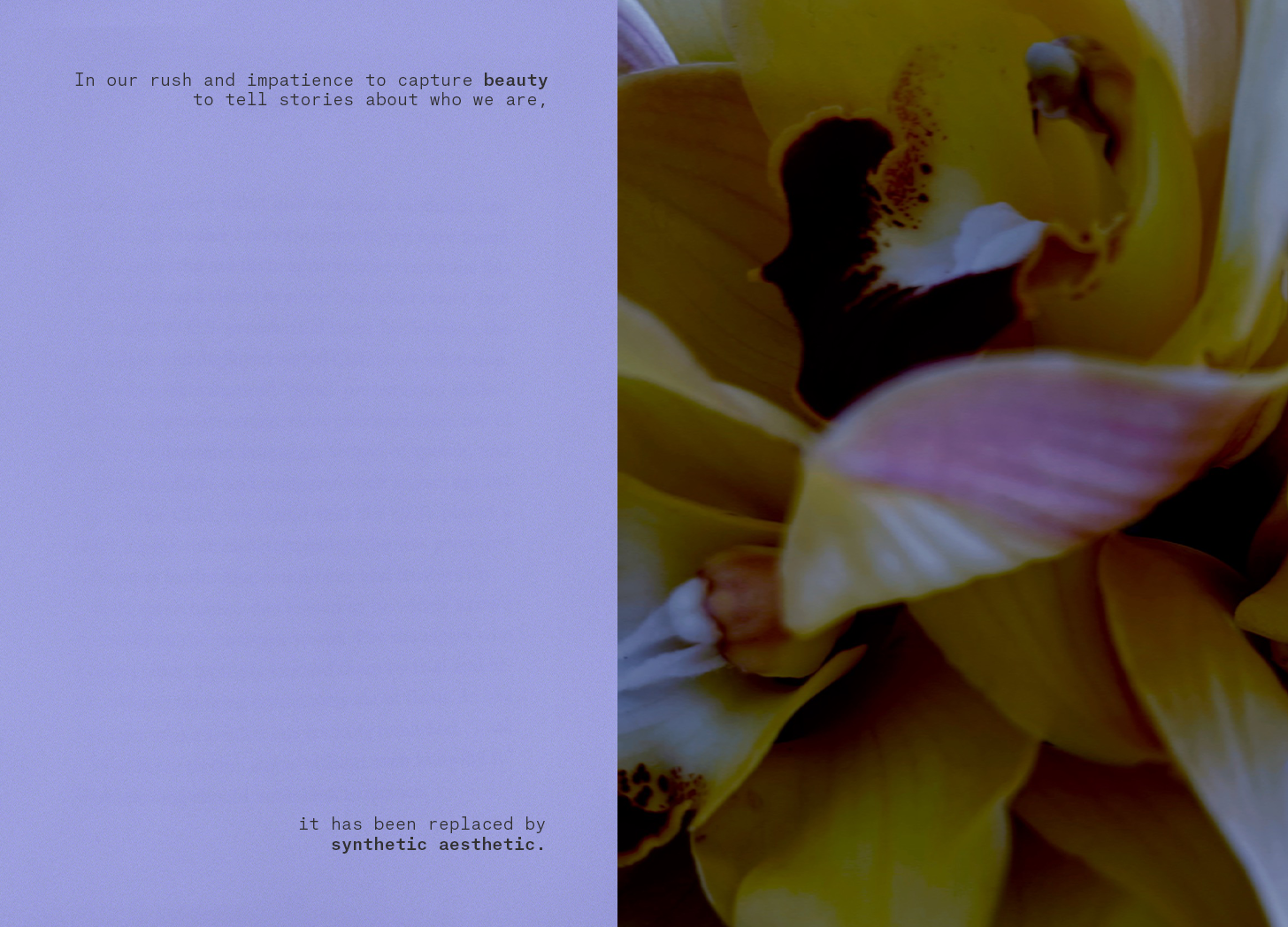
In our rush and impatience to capture beauty to tell stories about who we are, it has been replaced by aesthetic.
And aesthetic, at least in the way we now worship it, was never meant to carry this much weight.
Are we willing to slow down enough to notice the light on the wall before we try to capture it?
xT
a note on creative integrity
This work was made to be shared in essence, not extracted in form.These words, ideas, images are shared to inspire, not to be copied, lifted, swiped, repackaged, or borrowed otherwise without care. If they resonate, let them spark something original in you.